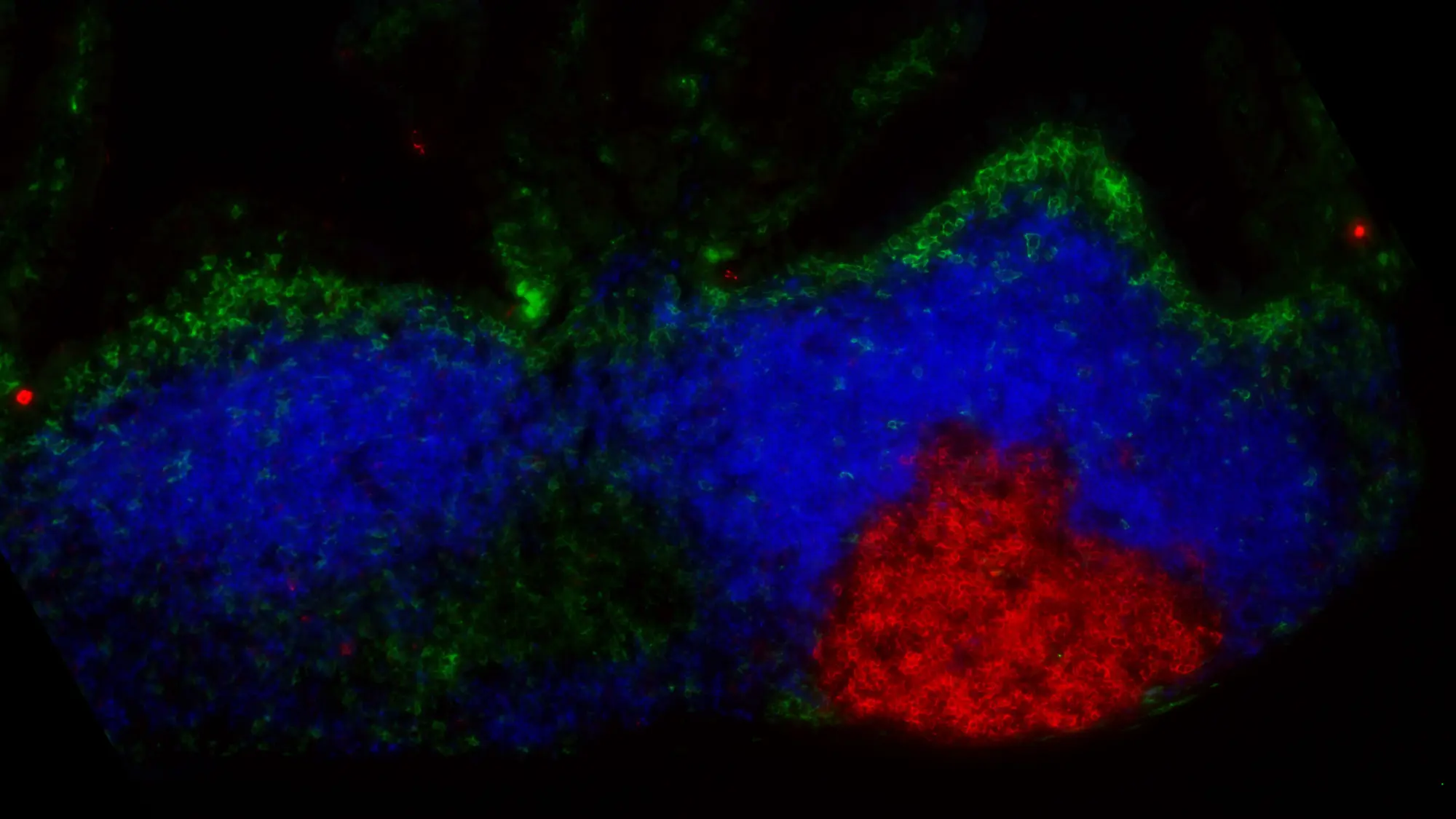

Yale researchers have discovered that the gut produces its critical protective antibodies through not one but two distinct pathways — a finding that could reshape how scientists design vaccines against intestinal and respiratory pathogens. The study, published in Immunity in December 2025, was supported in part by the Colton Center for Autoimmunity at Yale.
The antibodies in question are immunoglobulin A (IgA), the most abundant antibody type in the gut and a key component of the immune system’s mucosal barrier. IgA traps and neutralizes pathogens — bacteria, viruses, toxins — before they can adhere to the intestinal wall. The conventional understanding was that IgA is produced through a straightforward process in which naïve B cells mature inside structures called germinal centers before switching into their specialized class.
But the Yale team, led by PhD student Emily Siniscalco in the lab of Professor Joseph Craft and co-mentored by Professor Stephanie Eisenbarth, found something unexpected: a significant portion of gut IgA in the early weeks after immunization originates outside the germinal center entirely. More surprisingly, these non-germinal center IgA cells showed similar antigen-specificity and mutation levels to their germinal center counterparts — challenging the assumption that only germinal center B cells can develop durable, targeted immunity.
The researchers also identified a previously unreported switching pathway — from IgM to IgG and then to IgA — suggesting the gut has evolved a redundant defense system to ensure continuous IgA production. The findings have direct implications for the design of mucosal vaccines targeting norovirus, rotavirus, influenza, and SARS-CoV-2.
Featured Experts

Joseph Craft, MD
Director, Colton Center for Autoimmunity (Yale University)
Departments of Internal Medicine (Rheumatology, Allergy & Immunology) & Immunobiology, Yale School of Medicine, Yale UniversityFeatured Projects

Shedding Light on the Invisible: A New Paradigm for Predicting Multiple Sclerosis Disease Progression Using Novel MRI Tools for Probing Pathology in Normal Appearing Tissues
Applying advanced quantitative MRI to detect pathology invisible to current clinical tools, this project builds an AI model to predict MS progression and enable earlier, more personalized diagnosis and treatment.

Novel Tools to Track and Manipulate Immune Cells in Autoimmunity Models
Developing a cell-labeling tool to map immune cell interactions in living tissue, this project identifies the drivers of skin-resident T cell persistence in psoriasis and potential targets for disease prevention.

Featured Publications
Sequential class switching generates antigen-specific gut IgA from IgG1 B cells
Related News

What a "Silenced" Chromosome Can Tell Us About Autoimmunity
Penn Colton Center researcher Montserrat Anguera reveals how B cells maintain X chromosome inactivation, and how its breakdown drives lupus, offering new insight into female-biased autoimmune disease and treatment targets.
Yale Study Discovers a Second Pathway for Gut Antibody Production — With Implications for Vaccine Design
A Colton-supported Yale study has uncovered a second pathway for gut IgA antibody production, revealing a built-in immune backup system with significant implications for mucosal vaccine design.