
In the Media
June 25, 2026

What a “Silenced” Chromosome Can Tell Us About Autoimmunity

Published In:
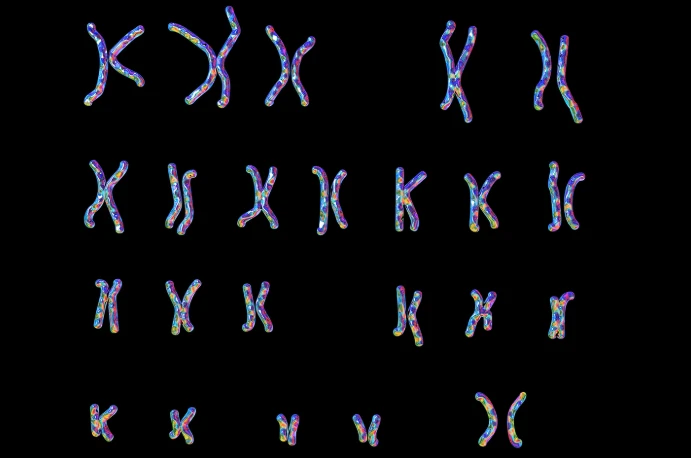
Chromosome karyotype

Systemic lupus erythematosus occurs far more often in women, and having multiple X chromosomes has long been linked to that risk. Two new studies led by Montserrat Anguera, PhD of Penn’s School of Veterinary Medicine — a member of the Colton Center for Autoimmunity at the University of Pennsylvania — dig into why, tracing the problem to how female immune cells manage their extra X chromosome.

Normally, cells with two X chromosomes silence one of them through a process called X chromosome inactivation, coating it with Xist RNA to keep its genes turned off. In B cells — the antibody-producing cells central to lupus — that silencing works differently than in most other cell types, and the two studies, published in Cell Reports, map out how.

The first study found that naive B cells maintain X inactivation through a distinct set of molecular marks rather than through Xist RNA alone — some silencing features are lost, but others persist, preserving a kind of memory of the inactive chromosome from earlier in development. The second study showed what happens when that maintenance breaks down: deleting Xist in B cells impaired X inactivation and triggered or worsened lupus-like disease in preclinical models.

Together, the findings sharpen the picture of how X inactivation is maintained — and lost — in the immune cells most implicated in lupus, and point toward the molecular mechanisms behind female-biased autoimmune disease more broadly.

In the MediaResearch FindingsAnimal ModelsB Cell BiologyBiological & MechanisticExperimental Platforms & ModelsHuman CohortsImmune DevelopmentSystemic DiseasesSystemic Lupus Erythematosus (SLE)University of Pennsylvania

Featured Experts

Montserrat Anguera, PhD

Montserrat Anguera, PhD

Colton Consortium Member

Associate Professor, Department of Biomedical Sciences, School of Veterinary Medicine, University of Pennsylvania

Featured Publications

The multiple roles of gamma interferon in intraepithelial T cell-villous enterocyte interactions in active celiac disease

bioRxiv [Preprint]
Johnson, JE; Agrawal, K; Al-Lamki, RS; Zhang, F; Wang, X; Liburd Jr, S; Tobiasova, Z; Rodriguez, L; Martins, AJ; Sefik, E; Flavell, RA; Robert, ME; Pober, JS September 2024
Adaptive ImmunityBiological & MechanisticCytokine SignalingExperimental Platforms & ModelsHuman CohortsIn Vitro ModelsInnate ImmunitySingle Cell TechnologiesT Cell BiologyCeliac DiseaseGastrointestinal DiseasesYale University

The subfornical organ is a nucleus for gut-derived T cells that regulate behaviour

Nature
Yoshida, TM; Nguyen, M; Zhang, L; Lu, BY; Zhu, B; Murray, KN; Mineur, YS; Zhang, C; Xu, D; Lin, E; Luchsinger, J; Bhatta, S; Waizman, DA; Coden, ME; Ma, Y; Israni-Winger, K; Russo, A; Wang, H; Song, W; Al Souz, J; Zhao, H; Craft, JE; Picciotto, MR; Grutzendler, J; Distasio, M; Palm, NW; Hafler, DA; Wang, A May 2025
Adaptive ImmunityAnimal ModelsBioinformaticsBiological & MechanisticData-Driven & QuantitativeExperimental Platforms & ModelsHuman CohortsMicrobiome–Immune InteractionsNeuro-Immune InteractionsSingle Cell TechnologiesT Cell BiologyOtherYale University
From the Consortium

Related News

What a "Silenced" Chromosome Can Tell Us About Autoimmunity
In the Media Research Findings
June 25, 2026

What a "Silenced" Chromosome Can Tell Us About Autoimmunity

Penn Colton Center researcher Montserrat Anguera reveals how B cells maintain X chromosome inactivation, and how its breakdown drives lupus, offering new insight into female-biased autoimmune disease and treatment targets.

Yale Researchers Identify Two New Therapeutic Targets for Fibrotic Diseases Like Scleroderma and Lupus
Research Findings
November 12, 2025

Yale Researchers Identify Two New Therapeutic Targets for Fibrotic Diseases Like Scleroderma and Lupus

Two Yale studies have identified a promising new antibody therapy and a previously unknown signaling pathway as potential treatments for fibrotic autoimmune diseases including scleroderma, lupus, and graft-versus-host disease.

Colton Consortium Sponsors 2025 FASEB Autoimmunity Conference
Events & Seminars
October 1, 2025

Colton Consortium Sponsors 2025 FASEB Autoimmunity Conference

The Colton Consortium sponsored the 2025 FASEB Autoimmunity Conference in Niagara Falls, a leading international forum dedicated to advancing autoimmune research and fostering collaboration among scientists and clinicians worldwide.